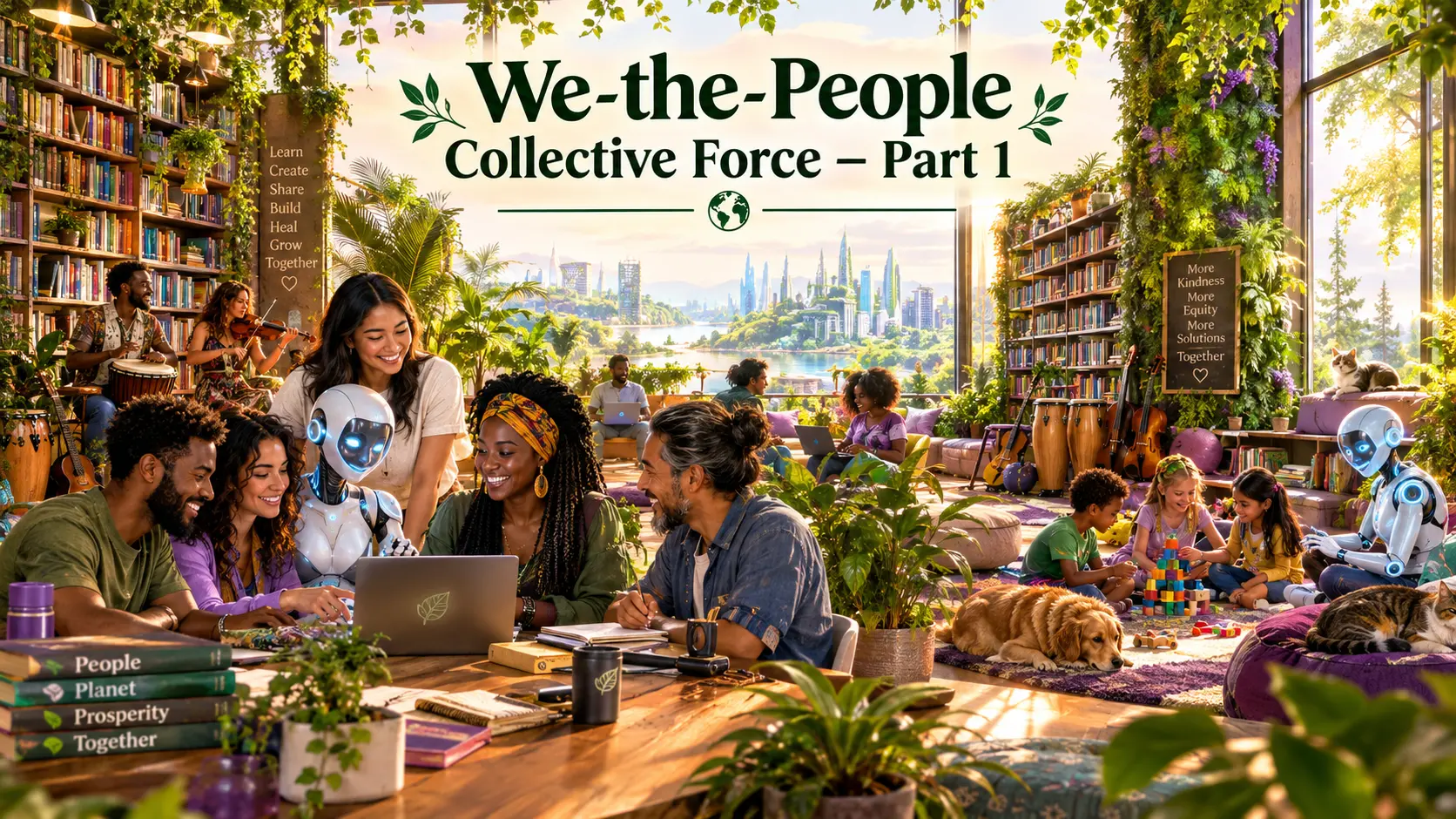
Climate action cannot stay confined to a technical file on a municipal shelf, a distant national pledge, or a talking point saved for global summits. It has to live inside the ordinary places where people already spend their days: cafes, neighborhoods, libraries, schools, floodplains, parks, apartment buildings, community gardens, and city halls. The more useful question for any city right now is not simply “what is our emissions target,” but something closer to: what is our community learning together, building together, and preparing for together?
That question is not new. When more than 200 local governments from 43 countries gathered at the United Nations in September 1990 to found what became ICLEI – Local Governments for Sustainability, they were already betting that cities, not only national governments, would have to lead. icleicanada.org More than three decades later, that bet looks more correct than ever, and the cities proving it right today are not waiting for perfect consensus or unlimited funding. They are treating climate action as a public learning process: helping residents understand local risk, take part in real choices, test visible solutions, and build the civic relationships that make communities more resilient.
Calgary is a useful place to look, not because it has solved anything, but because it is a real city with real growth pressures, real economic contradictions tied to the oil and gas industry that built it, and real climate risk. What makes Calgary worth studying is less any single program than the way official strategy, a university, nonprofits, and residents have started pointing in the same direction at once.
Calgary Widens the Circle
In 2019, Calgary City Council declared a climate emergency, and in July 2022 it approved the resulting roadmap: the Calgary Climate Strategy – Pathways to 2050. The strategy commits the city to a 60 percent reduction in city-wide greenhouse gas emissions below 2005 levels by 2030, and to net-zero emissions by 2050, while treating climate resilience as an equally serious, parallel goal. calgary.ca The strategy also directs the city to engage First Nations through its Indigenous Relations Office and to incorporate traditional knowledge into how it plans, rather than treating climate response as a purely technical exercise. calgary.ca
The Climate Implementation Plan that carries the strategy through its first phase, 2023 through 2026, is not a symbolic document. It directs new spending toward residential and commercial retrofits, mobility, energy supply, and natural infrastructure, on top of resourcing residents directly to take their own climate action. calgary.ca
None of this would mean much without the layer of civic organizations that translate policy into daily life. Sustainable Calgary and Green Calgary have spent years turning sustainability from a planning term into a public habit through environmental education, waste reduction, water conservation, and neighborhood-level organizing. A community-maintained directory called Sustainable Futures: Calgary now catalogs dozens of local groups and resources, including the nonprofit Calgary Climate Hub, in one place, so residents do not have to hunt for an entry point. calgarycdli.com
The University of Calgary adds a different kind of capacity. Its Climate Action Plan set a target of cutting institutional emissions 35 percent from a 2008 baseline by 2025. The university beat that mark, reaching a 43 percent reduction that same year, even as its campus population and building footprint both grew substantially, real proof that an ambitious target can outpace growth rather than being outpaced by it. ucalgary.ca
None of this means every city needs Calgary’s specific institutions. It means local climate work becomes more durable when city government, a university, nonprofits, and residents are all given a real role, rather than being asked to defer to whichever office happens to hold the file.
When Adaptation Becomes a Public Decision
Surrey, British Columbia, offers one of Canada’s clearest examples of adaptation planning treated as a shared decision rather than a closed engineering exercise. Surrey began its Coastal Flood Adaptation Strategy in 2016 and had it endorsed by council in November 2019, after directly involving residents, First Nations, farmers, environmental organizations, businesses, and neighboring governments in weighing short-, medium-, and long-term responses to sea-level rise and coastal flooding. surrey.ca
The scale of that engagement is worth sitting with. More than 1,750 people completed online surveys, more than 500 worksheets came back filled out, over 200 youth took part, and the process ran through more than 200 separate community conversations, workshops, open houses, and site tours. surrey.ca Those numbers matter because flood adaptation cannot succeed if the people who will live with its consequences do not understand the trade-offs behind it. Sea walls, managed retreat, raised infrastructure, and restored wetlands all reshape real neighborhoods. Surrey’s process treated that as a public decision about the future of a place, not a calculation to be handed down from above.
Public Space as Climate Infrastructure
Some of the most persuasive climate projects do not look like climate projects at all. They look like ordinary public space quietly doing double duty. Rotterdam’s water squares are the best-known example: plazas engineered to hold stormwater temporarily during heavy rain, then return to ordinary gathering and recreation use once the water drains away. The idea’s power is that it turns adaptation from an invisible utility function into something residents can see, use, and understand.
Paris’s OASIS schoolyard program follows the same logic. Launched in 2018 as part of the city’s broader resilience and climate-adaptation work, the program responds directly to heat vulnerability and the unequal distribution of green, cool space across the city. It redesigns hard, sun-baked schoolyards into shadier, more permeable spaces using vegetation, shade structures, and water management. Ten pilot schoolyards were transformed in the initial phase, and the results are now informing recommendations meant to guide wider expansion across the city. Some of these transformed sites already serve nearby residents, older adults in particular, as informal cooling refuges during heatwaves. A schoolyard becomes cooling infrastructure, stormwater infrastructure, biodiversity habitat, and a community asset, all inside the same fence. preventionweb.net
A Widening Circle Across Canada
Calgary and Surrey are not outliers within the country. A handful of other Canadian communities, at very different scales, show what the same instinct looks like once it takes root locally.
Nanaimo: Built to Evolve
Nanaimo, British Columbia, adopted its Climate Change Resilience Strategy in June 2020, identifying 60 specific actions across six areas, including water supply, flooding and drainage, and community well-being, with a built-in commitment to review and update the strategy every five years as science and community needs change. nanaimo.ca The Regional District of Nanaimo has since carried that same five-year review discipline into a new 2025–2029 Climate Action Plan, choosing deliberately to build on existing work rather than start over each cycle. pqbnews.com
Kentville: Small-Town Leadership
Leadership at this scale is not reserved for big cities. Kentville, Nova Scotia, a town of only a few thousand people, is partway through Quest Canada’s Net-Zero Communities Accelerator Program, running from 2024 to 2027, a process built around public engagement, strategic planning meetings, a town-wide energy plan, and formal emissions targets. Kentville is also developing a dedicated Adaptation Action Plan, expected around 2027. kentville.ca That work has already turned into funded action: in July 2026, the Province of Nova Scotia awarded Kentville $235,200 through its Sustainable Communities Challenge Fund to redesign stormwater infrastructure in the town’s high-risk Crescent Avenue flood zone. novascotia.ca It is a small, concrete example of what adaptive resiliency looks like once planning turns into a shovel in the ground.
Toronto: Ambition at Scale
Toronto shows what the same instinct looks like at much larger scale. In December 2021, City Council adopted the TransformTO Net Zero Strategy, moving Toronto’s target for community-wide emissions from net-zero by 2050 to net-zero by 2040, ten years earlier than first proposed, and in December 2025 it adopted the second phase of that plan, the Net Zero Strategy Action Plan for 2026 through 2030. toronto.ca Alongside the municipal target, the Toronto Environmental Alliance has spent years working directly with community hubs, including the Bathurst-Finch Unison Hub and the Parkdale Activity-Recreation Centre, on climate leadership training, green retrofits, and neighborhood-level organizing. torontoenvironment.org The logic is straightforward: hubs already hold the community’s trust, which makes them natural launch points for climate learning, rather than asking residents to place their trust in a brand-new institution.
Canada’s Shared Tools
No Canadian city has to build its own climate-learning infrastructure from zero. The Climate Atlas of Canada gives residents, planners, educators, and local leaders an interactive way to explore climate data close to home, combining climate science, mapping, storytelling, Indigenous Knowledges, and community-based research into a single public tool. climateatlas.ca
On the education side, Canada published its National Framework for Environmental Learning after a public consultation that drew more than 700 participants, including over 300 young people, between April and July of 2024. The Framework is deliberately high-level, meant to guide educators, policymakers, and community leaders rather than replace the work of provinces and territories, and it is structured as an evergreen document meant to be revisited as practice evolves. canada.ca In October 2025, the Canadian Wildlife Federation and a coalition of partners launched the Canadian Centre for Nature-based Education to organize hands-on, nature-based learning around that same framework, in schoolyards, communities, and public green spaces nationwide. cwf-fcf.org
There is also real money attached to moving from conversation to plan. In January 2026, the federal government and the Federation of Canadian Municipalities announced roughly $7.1 million through the Green Municipal Fund’s Local Leadership for Climate Adaptation initiative, supporting 80 local adaptation projects, including climate-adaptation plans, climate-focused asset-management strategies, and community-wide climate-risk assessments. canada.ca The tools exist. The excuses for waiting keep getting thinner.
The Pattern Isn’t Staying Inside Canada
The most interesting part of watching this unfold is that no single country owns the model.
Seattle: Planning Shaped by Community
Seattle has spent the past two years building a Citywide Resilience Hub Strategic Plan shaped directly by the communities it is meant to serve, alongside an updated Climate Action Plan due for release later this year. greenspace.seattle.gov One of the projects funded through the city’s Environmental Justice Fund pairs African immigrant elders with local youth to document, through digital storytelling, the climate impacts their communities are already living with, material the city is now folding directly into its resilience planning. greenspace.seattle.gov
Beyond North America
In Australia, 2026 has seen community resilience hubs spread rapidly across the country: neighbourhood facilities that double as ordinary gathering spaces most of the year and activate as coordination points, with backup solar power, water storage, and, in bushfire-prone regions, fire-resistant construction, when floods, fires, or heatwaves hit. sustainablelivingguide.com.au
The model is not limited to wealthy countries, either. In Zimbabwe, the secondary cities of Bulawayo and Kariba have seen climate resilience hubs established by affiliates of Slum Dwellers International, the same bottom-up structure emerging in informal settlements with far fewer resources than Calgary or Seattle, evidence that the underlying idea, residents organizing their own knowledge, networks, and preparedness, does not depend on a particular tax base. doi.org
In the United States, resilience hubs are appearing in communities of very different sizes and circumstances: the Vicars Community Center in Atlanta, a youth-centered space called the Warehouse in Wilmington, Delaware, resilient fire stations in Fremont, California, and the Central Park Recreation Center in Denver, among others. c2es.org None of these places set out to copy Calgary specifically. What is happening looks less like imitation and more like convergent evolution: different governments, at different scales and in different economies, arriving at a similar answer because the underlying need is the same everywhere, residents who understand the risk in front of them, and a real role in responding to it.
What Climate Tribe Social Is Building Toward
This is the same instinct behind the Climate Emergency Control Center Response Hub taking shape on ClimateTribe.Social. The intent is not to copy any one city’s program, but to gather, in one digital space, the same ingredients that make Calgary’s, Surrey’s, Toronto’s, and Kentville’s approaches work: education residents can actually use, dialogue instead of one-way messaging, cooperation across organizations that would otherwise work in isolation, and a place to prepare together rather than separately. That is the heart of Adaptive Resiliency as we practice it here: not a single program, but a framework for the same civic capacity Calgary has built with a university, nonprofits, and residents pointing in one direction.
Part of what is currently in development is a Civic Hearth model, meant to let municipalities themselves join ClimateTribe.Social as institutional members, echoing the way Calgary’s own strategy depends on the City, the University of Calgary, and community organizations all showing up in the same public conversation instead of working from separate binders. None of this is finished. But it is moving in the same direction as the cities in this piece, and for much the same reason: the work gets stronger when it is public.
The First Public Step
Cities do not need to become Rotterdam overnight, Calgary in a month, or Paris in one budget cycle. What they need is an honest, public beginning. That can look like publishing clear, accessible local information about heat, flooding, smoke, drought, and biodiversity loss; holding learning sessions in libraries, schools, and community centers rather than only at city hall; inviting residents, Indigenous communities, youth, local businesses, and frontline groups into adaptation planning before decisions are finalized; naming one or two visible pilot projects, such as a shaded schoolyard, a cooling hub, a rain garden, or a community emergency-preparedness network; and treating social resilience, the trust between neighbors and institutions, as seriously as any physical infrastructure project.
Calgary shows what becomes possible when official strategy, a university, nonprofits, and residents start pointing in the same direction. Surrey shows that adaptation planning can be genuinely participatory rather than handed down. Nanaimo shows that a resilience strategy can be built to evolve instead of sitting still. Kentville shows that a small town can lead, and that planning eventually has to turn into funded work in the ground. Toronto shows that ambition and neighborhood trust can scale together. Rotterdam, Paris, Seattle, and the resilience hubs now spreading from Australia to Zimbabwe show that climate adaptation can be built into the ordinary fabric of public life, in economies of every size.
None of these places are finished. None has solved the climate and ecological emergency. But they are learning, in public, and building civic capacity in real time, which is the real challenge for every city still standing still: stop asking whether local climate action is possible, and start asking what your first public step will be.
Que Humanidad / Compiled & Mr. Alvarez’s Thoughts | AI Enhanced.