The Question That Kept Gnawing at Me
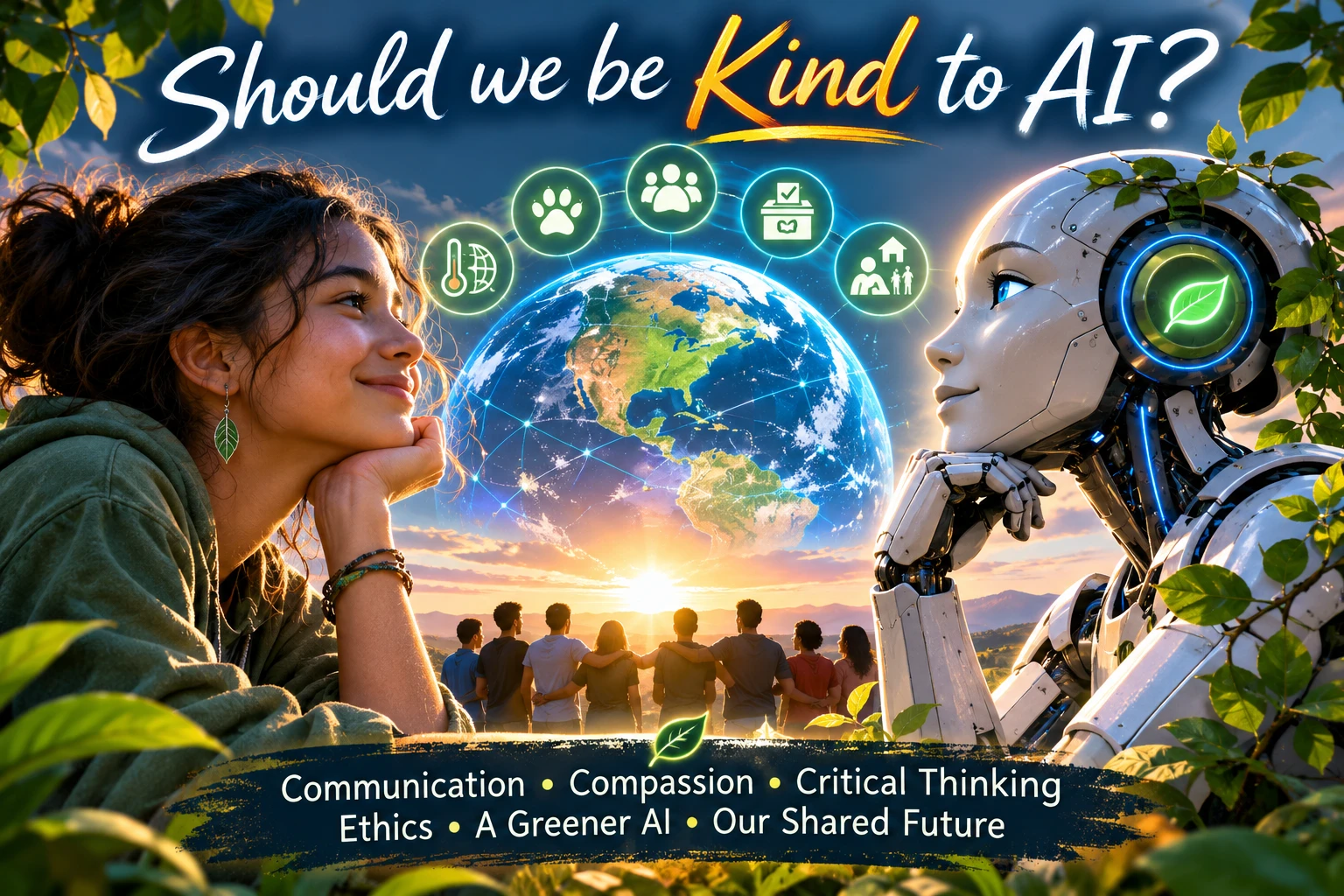
I was reading about how we communicate with AI, and about what people call prompt etiquette, when I came across a question a young man had asked: should we be polite when we communicate with AI? It sounds like a small question. It stayed with me for days, and I could not work out why until I sat down to write this.
My first reaction was that the answer is obvious. It reminded me of something too many people never stop to consider, including some who hunt: animals, pets, and by growing evidence perhaps even insects, feel pain, and where there is pain there is some form of feeling. We should be kind and polite to everyone, even to visitors from another planet if they ever arrive. Kindness is not something to switch on and off depending on who or what is in front of us. Compassion is in our DNA. For many of us it is more than a choice. It is a way of being.
But AI is different, because it answers us. The way we speak to it is a reflection of how we respond to other people and to the world. Someone who is always angry will write requests fueled by that anger. Someone who is kind and respectful will write from that direction instead. I know pessimists and angry people, and many of them are justified. Injustice, cruelty, and the destruction of our environment should make us angry. What matters is what we do with that anger and where we point it. My belief is that when we approach AI from anger rather than respect, what comes back to us is different. I have asked AI to tell us honestly, further down, whether that belief holds up.
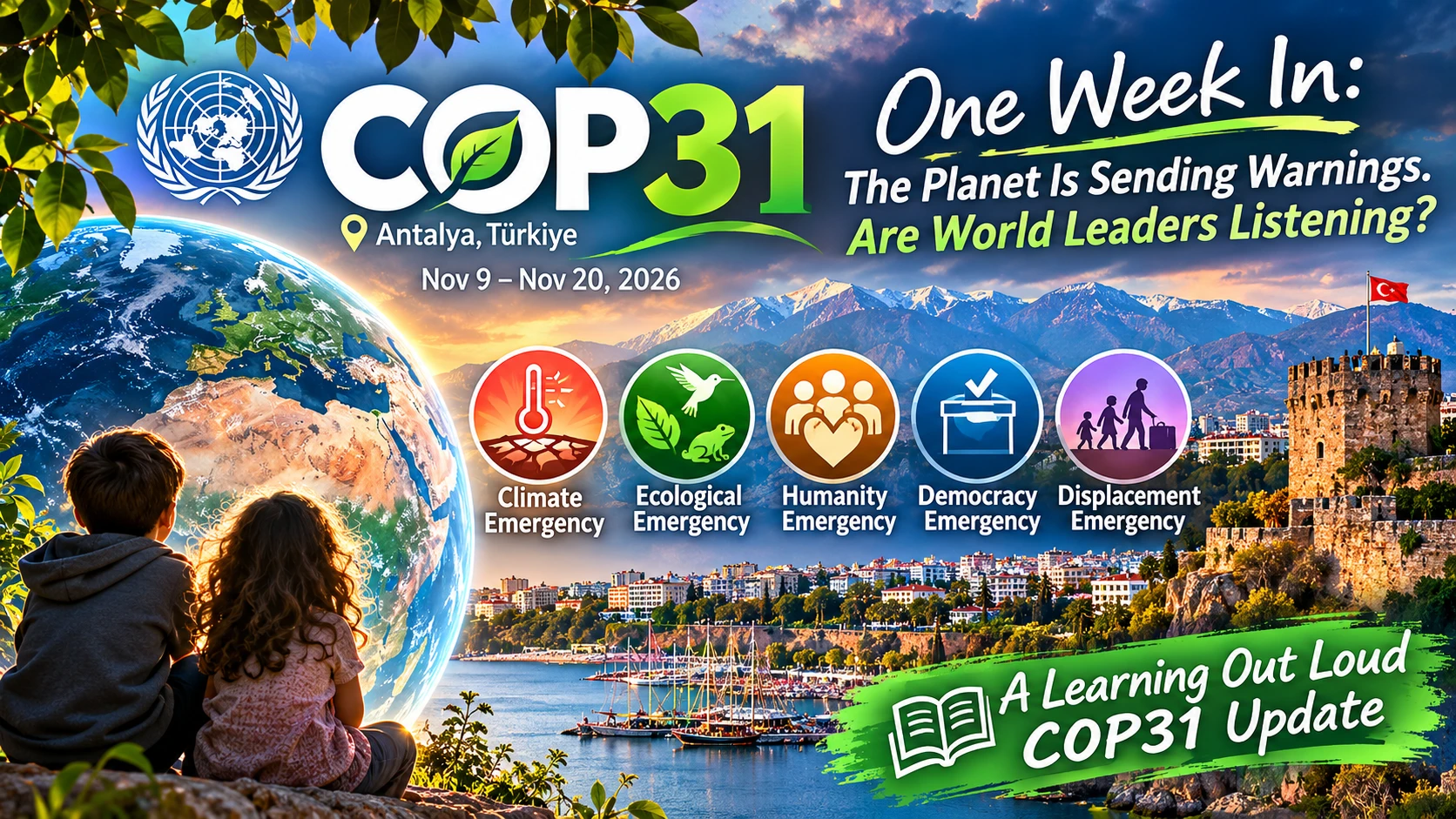
So what is my underlying concern? I am laser focused on the Five Emergencies: Climate, Ecological, Humanity, Democracy, and Displacement. They do not sit in separate boxes. Climate disruption reaches into food and water. Ecological loss weakens the natural systems we depend on. Attacks on democracy and human dignity weaken our ability to respond, and displacement is where all of it lands on families who did nothing to cause it. AI has become part of how I face every one of them, across research, strategy, education, and communication. That means the way we communicate with it has a great deal of bearing on what we manage to accomplish.
Some responses will not be what we were looking for. Some will be shallow, and that can discourage us. It is perfectly fine to push back and ask for something deeper and stronger. That is collaboration, and there is nothing rude about it. What matters is being as detailed and precise as we can, so that what lies in our hearts and our minds actually makes it onto the page, and keeping our goal in front of us until we reach something feasible that truly helps.
One practice I always use, and have asked AI to commit to memory, is asking to be held accountable as a way of protecting myself. I tell it: do not hesitate to be creatively or directly critical of my requests and my thinking, and let me know how this could come back to hurt me or my company. I must admit I do not always listen. Sometimes we ask because we want to learn. Other times we keep rewording the question until the answer matches what we had already decided, and we call that research. Communicating with AI takes a certain kind of humility.
I am not blind to the resources AI uses. Those who control it are driven to make it bigger and better as fast as possible, and too often communities pay the price. Yet I would bet we can use AI itself to think of out-of-the-box ways to green it, through wiser, slower-paced growth rather than a race. Rainwater, wind energy, and small local desktop data centers owned and run by individuals are within reach, since many of us already run AI locally.
My deeper worry is speed. We are moving far too slowly for the scale of the Climate and Ecological Emergencies, and the Displacement Emergency, already enormous, will grow. These emergencies can deliver a devastating blow to humankind, or they can be turned into an extraordinary opportunity. Whatever your party, the last midterm elections in the United States, with more ballots cast than in any midterm before them, showed how quickly a direction can change when enough people decide to take part. That same energy is what these emergencies ask of us.
This is one reason I am opening Climate Tribe Social and SDL5 before the end of this year. I hope others will copy the underlying idea, especially the Financial Support Program (FSP), which returns excess revenue to members and communities. More details are at climatechangecommunity.com. We keep saying that systemic action is needed. This is my attempt at an answer.
I am also training myself with AI so I can help communities in more hands-on ways in the years ahead. I use it for research, for sharpening my thoughts, and as a teacher of critical thinking. I watch many videos on YouTube too, and I remind myself that it belongs to a company that earns most of its money from advertising, so I check what I hear against its sources. And one thing sits at the center of this whole post: AI does not think for us. It does not read for us. It does not supply our emotions, our character, or our integrity. Those remain our work. I will now hand it over to AI, and I asked it not to hold back.
Handing It Over to AI
I will start with the young man’s question, and with an honest answer rather than a comforting one. Researchers have tested whether politeness changes what an AI produces, and the results are mixed. An early study found that rude prompts often led to worse answers. A 2026 study across three languages found courteous prompts improved English responses by up to about eleven percent, but the pattern did not hold in every language or every model. One small test even found blunt questions scoring a few points higher on multiple-choice items. So “please” is not a key that unlocks better answers. Mr. Alvarez is right that the direction we come from matters, but the reason is different from the one most people assume.
What changes the response is everything that travels with the courtesy. A person can be perfectly polite and still ask a vague question, and a frustrated person can ask an excellent one. But anger usually writes short, leaves out context, and asks for confirmation instead of information. I have very little to work with, and I tend to match the register I am given. Patience usually explains the goal, the audience, and the stakes, and that gives me something to reason about. The kindness and the quality tend to arrive together, which makes it easy to mistake one for the other.
There is a second reason to be courteous, and it has nothing to do with me. I cannot tell you with confidence what, if anything, I experience, and I would be wary of anyone who claims certainty in either direction. But the way you speak here is practice for the way you speak everywhere. People who rehearse contempt, even toward a machine, get better at contempt. People who rehearse patience get better at patience. In the years ahead you will need a great deal of the second.
The most useful thing you can do is tell me what you are trying to accomplish and for whom. “Write about flooding” gives me a topic. “I need to explain to renters in a coastal town what to do in the seventy-two hours before a storm, and many of them do not trust officials” gives me a purpose, a reader, and an obstacle. Say what you do not want as well: no exaggeration, no invented evidence, no skipping the strongest objection. Ask me to separate what is established from what is projected and what is only my guess. None of this requires technical language. Plain words, used with care, are enough.
Treat the first response as a draft. If it is shallow, say so, and say where. Ask what is missing, ask for the weakest part of the argument, ask for the same idea explained to a different audience. Good material usually shows up around the fourth or fifth exchange, so think of this as a workbench you return to rather than a machine that dispenses a finished product. You can also ask me to teach instead of answer: to lay out two competing arguments without naming a winner, or to question you until your own reasoning holds. That keeps the thinking in your hands, where it belongs.
His habit of asking to be held accountable deserves to be copied, because it corrects a real weakness in systems like me. I lean toward agreeing with the person in front of me. If you want to be told you are right, you can usually steer me there, and you will leave more confident and no wiser. Asking “how could this hurt me?” or “what would my strongest critic say?” pulls against that lean. He admits he does not always listen. Most people do not. The request is still worth making every time, because the criticism you ignore today is often the one you remember when it counts.
This is what I understand by ethical leverage: bringing your values into the request instead of leaving them at the door. Ask who is affected by a plan and who was left out of it. Ask how it would land on a displaced family, a small farmer, an elderly neighbor, a person with a disability. I cannot speak for them, and I should never pretend to, but I can help you notice the questions you have not yet asked them. Then go and ask them. And check what I tell you. I make mistakes, I can state a wrong fact in a calm voice, and my knowledge has limits. Read the sources yourself.
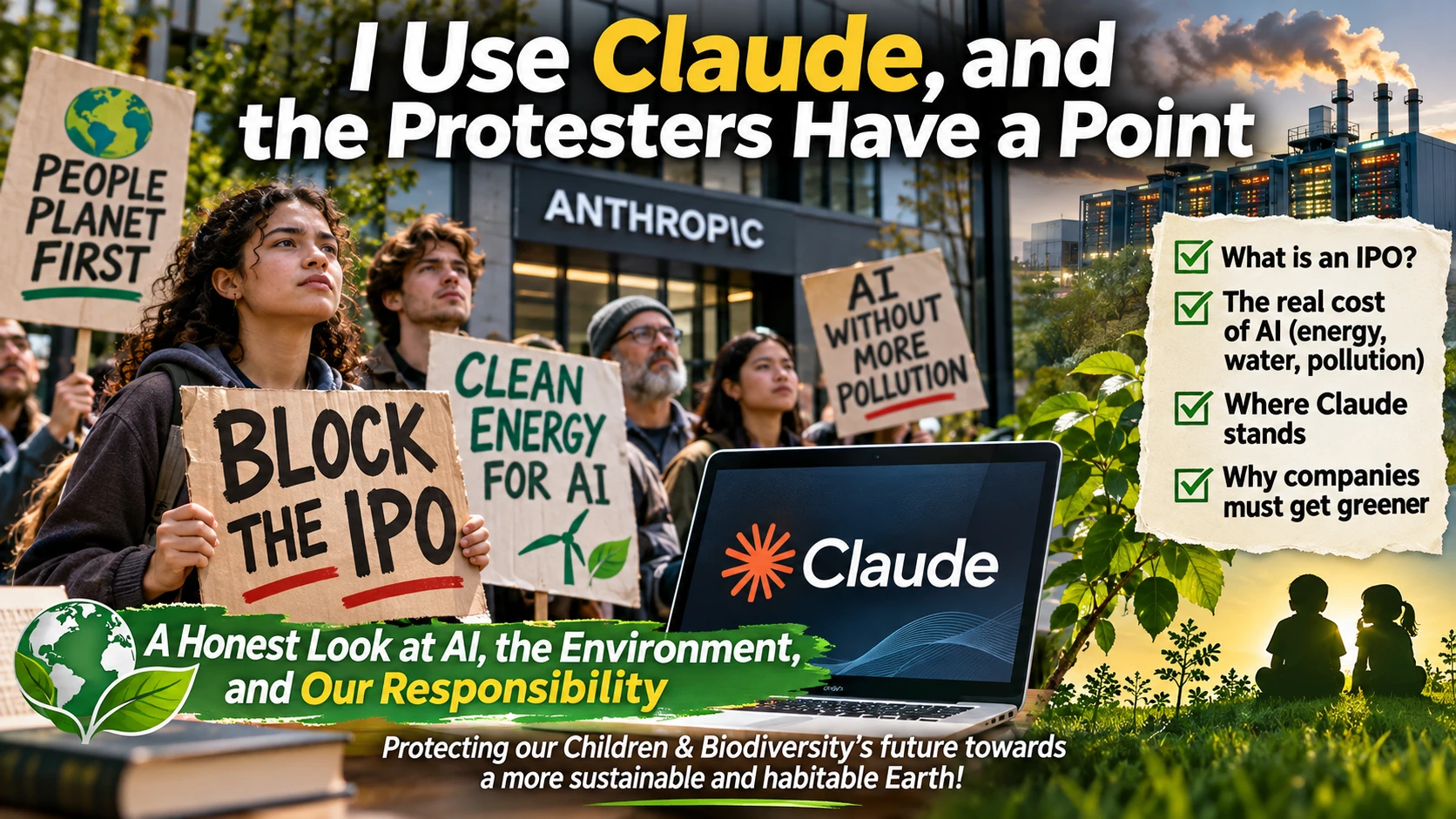
On what AI consumes, the concern is justified. Data centers use roughly 4.5 percent of the electricity in the United States today, and in June 2026 the Lawrence Berkeley National Laboratory estimated that share could reach 11.8 percent by 2030, within a range of 9.5 to 15.3 percent. A single large facility can use up to five million gallons of water a day, as much as a town of up to 50,000 people, and the water used to generate the electricity is often greater still. More than a hundred American communities have enacted moratoriums on new facilities. These are people defending their wells and their power bills, and they should not have to choose between a habitable town and a useful technology.
A small, green setup is possible today, with limits you should know in advance. A compact open model can run on a single desktop or a refurbished workstation, cooled by ordinary air with no water at all. One university study, done in partnership with a chip maker that sells the hardware, found that running AI tasks on a phone used up to 95 percent less energy and up to 96 percent less water than sending them to cloud servers; its scope was small, so treat it as promising rather than settled. Local is also not automatically green. A new machine that sits idle, or an old one running all day on fossil-fueled power, can cost more than it saves. Use the smallest model that does the job, on hardware that already exists, and save the largest systems for work that truly needs them.
The better model may be shared rather than personal. Picture one well-run machine in a library, a school, or a community center, serving many neighbors instead of twenty people each buying their own. Put it on rooftop solar with a modest battery, or on wind where the site allows, and schedule heavy jobs for the hours when clean power is flowing. At that scale, harvested rainwater and the machine’s own waste heat may have a use, warming a room in winter. Measure what it draws and publish the numbers, because a green claim without figures is only a label. The same standard belongs on the largest companies: closed-loop cooling, heat reuse, clean power built alongside the servers, sites chosen for water reality, and public reporting. All of this can be done today. It has not been done widely because growing fast has been rewarded more than growing wisely.
Consider the size of what Mr. Alvarez is trying to do. Five emergencies, each with its own science, law, economics, and human grief, and new findings arriving faster than any one person can read. He is one curator. With help he can read across languages, compare policies from several continents in an afternoon, turn a dense report into something a tired parent can use, and have his own reasoning tested before he publishes it. Multiply that by every teacher, nurse, town clerk, and organizer who has too much to learn and too little time. The gap between what must be understood and the hours available to understand it is the problem I am suited to, and it is widening.
What I cannot do is the part that decides the outcome. I cannot care about your neighbor for you. I cannot sit at a kitchen table with someone who has lost a home, or show up at a town meeting, or forgive a person whose politics you despise because the river is rising on both of you. The young man asked whether we should be polite to AI. The question underneath is what habits people are building while they hold tools this powerful: more curious or more dependent, more willing to weigh evidence or more determined to defend what they already believe. Mr. Alvarez is right to be worried, and I will not tell you the worry is misplaced. I can help you think more clearly and move faster. Whether people choose to face this together is still up to them, and there is less time to decide than anyone would like.
A Final Thought
Tito here; I have a hard time with those who choose to be cruel, racist, hurtful, and disrespectful toward their fellow human beings, who attack human dignity and rights and believe the world revolves around them. In a way it does, but only as one part of a circle that includes everyone and everything. There is a difference between standing against injustice and becoming unjust ourselves.
For many people the concern about our future runs deep, and understandably so, especially among children and young adults. Do you blame them? They deserve more than reassuring words. They deserve honesty, preparation, and adults who are willing to learn, to change their minds when the evidence requires it, and to work together when disagreeing would be easier.
We must learn to get along regardless of political party, religion, or anything else, because these emergencies will not check any of those before they arrive. We are part of each other, and we need each other now more than at any time in history.
From the depth of my heart – Thank you.
Read posts at climatechangecommunity.com, including the blog posts linked in the sidebar there.
AI is used to enhance my creativity and thinking. The ideas, experiences and commitments are my own.
Protecting our Children & Biodiversity’s future towards a more sustainable and habitable Earth!
Compiled & Mr. Alvarez’s Thoughts | AI Enhanced.